 ResortSlopes
Glacier Skiing in the Alps: Early Season and Summer
Last reviewed 2 November 2026. Opening dates and lift schedules change every year and with the weather; the dates below are those the operators published, and past dates are labelled as such. Always check the operator's own page before you travel.
A glacier ski area is a ski area whose pistes run on permanent ice and compacted snow, usually at the very top of a resort. Because it sits so high, it can open in the autumn before the rest of the mountain and, at a few places, offer limited skiing in summer. It is not a guarantee: in August 2026 both Zermatt and Saas-Fee suspended their summer glacier skiing because of heat.
What is a glacier ski area, and why does it open early?
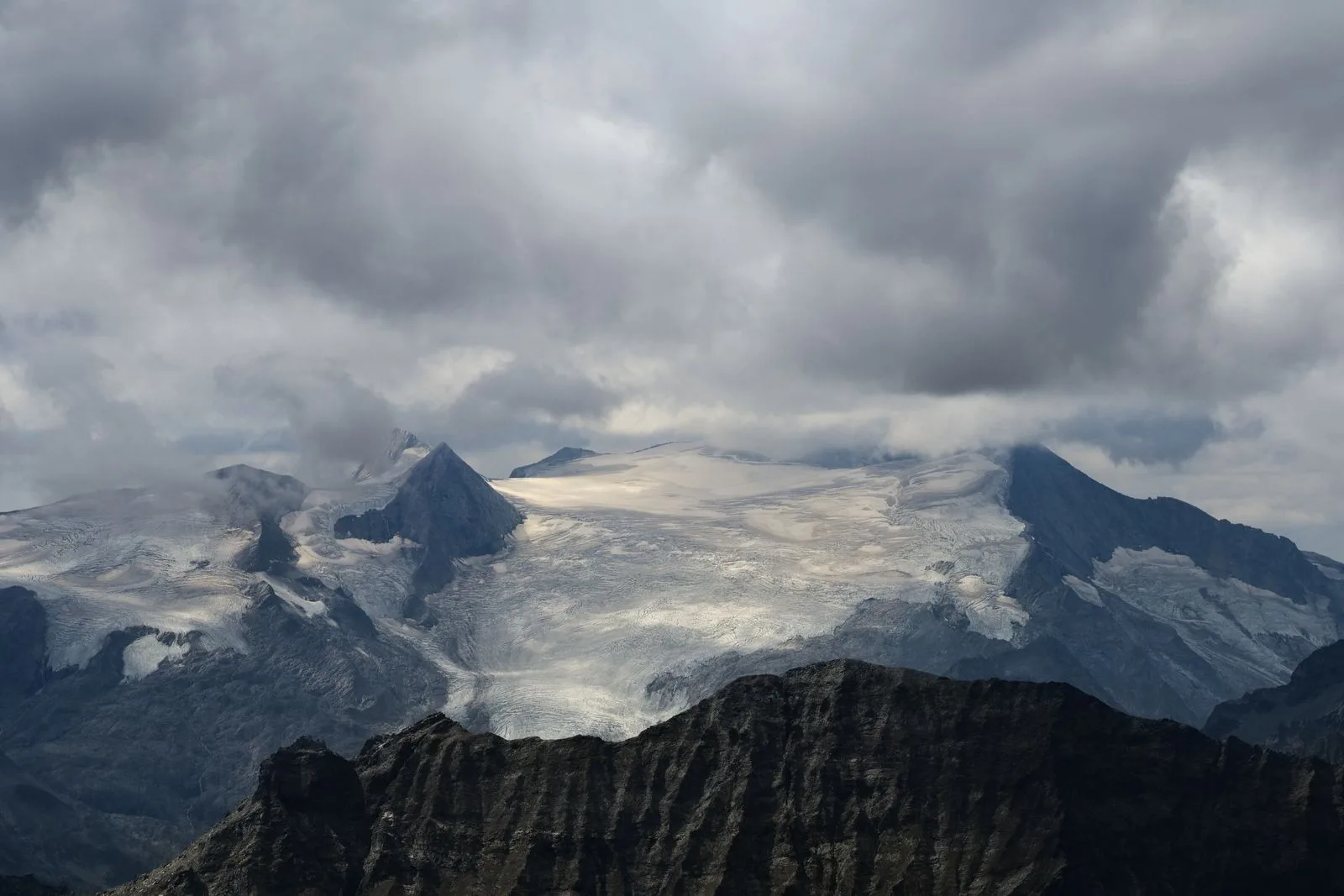
A glacier is a body of ice that builds up from snow over many years and flows slowly downhill. Where a lift system reaches the upper part of a glacier, the resort can groom pistes on it. Height is the main advantage: the air is colder, so snow falls as snow more often and the surface survives warm spells better than it does lower down. That is why glacier sectors are usually the first lifts to turn in the autumn, and why World Cup racers use them for early-season training. The general link between altitude and snow reliability is covered in our guide to the highest ski resorts in the Alps.
Two things are worth separating. A glacier ski area is simply terrain on a glacier. A summer ski area is the much smaller group of glacier sectors that try to run in June, July or August. Most glacier terrain in the Alps is open in autumn and winter only.
Which resorts in our dataset have glacier skiing?
We checked each resort against official operator or tourism-board pages. Where we could not confirm a glacier sector officially, we left the resort out of this list rather than guess.
| Resort | Glacier terrain | What the operator says |
|---|---|---|
| Zermatt | Theodul Glacier, Matterhorn Glacier Paradise and Plateau Rosa | The lift company calls it Europe's highest and biggest summer ski area, with up to 21 km of pistes |
| Sölden | Rettenbach and Tiefenbach glaciers | 34 km of pistes and 9 lifts in the glacier ski area |
| Tignes | Grande Motte glacier | Summer skiing in 2026 from 20 June to mid-July, subject to conditions |
| Saas-Fee | Glacier terrain above the village | Summer skiing suspended from 10 August 2026 |
| Garmisch-Partenkirchen | Zugspitze glacier ski area | 20 km of runs on a plateau at about 2,600 m |
| Breuil-Cervinia | Plateau Rosa, shared with Zermatt | The resort's own site advertises skiing on the glacier |
We deliberately left out Chamonix-Mont-Blanc, Verbier and Val d'Isère from the glacier list. Each has high terrain, but we could not verify a glacier piste sector and its opening period from an official page, so we do not make the claim here.
What is it like at Zermatt and Breuil-Cervinia?
The Zermatt lift company describes wintry conditions on the Theodul Glacier all year round, with skiing and snowboarding possible until midday even in summer, and calls it Europe's highest and biggest glacier ski area, with up to 21 km of pistes. It places the Plateau Rosa area on the Swiss-Italian border at 3,480 m. The same operator publishes the summer lift schedule early: the point of summer skiing is a morning session, then a return to the village. The Italian side is linked with Zermatt by the Matterhorn Glacier Ride II, which the operator says runs between Klein Matterhorn and Testa Grigia, and Breuil-Cervinia advertises glacier skiing on its own website.
Zermatt shows how fragile the offer can be. In summer 2026 the lift company temporarily suspended guest skiing on the Theodul Glacier, citing persistent high temperatures, no night-time cool-down, thunderstorms and changed snow and glacier conditions. It resumed public skiing on 14 October 2026, when the Plateau Rosa 1 and 2 lifts and the Matterhorn Glacier Ride II reopened after snowfall and lower temperatures. Training slopes for Swiss-Ski teams continued on a limited basis in the meantime.
How does Sölden's glacier compare?
The glacier area at Sölden covers the Rettenbach and Tiefenbach glaciers: according to the resort, 34 km of pistes served by 9 lifts. It is best known as the venue of the FIS World Cup season opener in late October; in 2026 the giant slalom races were held on 24 and 25 October. Austrian snow-report sites reported that the glacier lifts started in early October 2026, with the rest of the ski area opening later, so Sölden is mainly an autumn and early-season glacier. Skiers who want the full 147 km area should plan for the main opening instead, which the resort publishes each year.
What about summer skiing in Tignes and Saas-Fee?
At Tignes the Grande Motte glacier is reached by the Perce-Neige funicular and a cable car. The resort's site lists summer 2026 skiing from 20 June to mid-July, subject to favourable conditions, and shows lifts running only in the morning: the funicular from 06:45 to 13:00, for example, and the cable car from 06:50 to 12:15. The resort's own pages give slightly different end dates for the same period (15 or 19 July), which is a good reminder to check the live page. For winter, Tignes lists a phased opening from 21 November 2026 to 2 May 2027, again subject to snow.
At Saas-Fee, the operator Saastal Bergbahnen paused summer skiing from Monday 10 August 2026, with 9 August the last day, because high temperatures changed snow and glacier conditions so that the slopes could no longer be kept at the required quality and safety, according to Swiss news reports. It said it would reopen when conditions allow. Treat any summer glacier plan as provisional until the week you travel.
What about the Zugspitze?
The Zugspitze glacier area above Garmisch-Partenkirchen is a different kind of glacier skiing. The operator describes 20 km of runs on a plateau at about 2,600 m, between the Schneefernerkopf (2,874 m), the Wetterwandeck (2,698 m) and the Zugspitze (2,962 m). That is much lower than the Swiss and French glaciers, so it follows a winter calendar: the operator expects the 2026/27 season from 27 November 2026 to 2 May 2027, with the dates marked as estimates, while the lower Garmisch-Classic area is expected from mid-December until 29 March 2027.
Are glaciers retreating, and does it affect skiing?
Yes. The Swiss glacier monitoring network GLAMOS, working with ETH Zurich, reported in October 2025 that almost a further three percent of Swiss glacier ice volume was lost that year, the fourth-largest annual loss on record, and that Swiss glaciers have lost a quarter of their volume since 2015. More than 1,000 small glaciers have already disappeared. Ski operators are aware of this: Zermatt's own 2024 statement mentions climate change and rising temperatures, and in 2026 both Zermatt and Saas-Fee had to stop summer skiing for guests. None of this means autumn and winter glacier skiing is ending next season, but it does mean the summer window is the most exposed part.
What should you expect, and how should you plan?
- Limited terrain. Summer glacier skiing means a handful of lifts and a small, groomed area, not the full resort. Zermatt's up to 21 km is the operator's own upper figure, not a daily guarantee.
- Early starts. Lift hours are short and in the morning, because the snow softens quickly in the sun. Both Zermatt (until midday) and Tignes (lifts closing around midday to 13:00) publish this.
- Autumn is the better bet. Early-season glacier openings, like Sölden's, are more dependable than summer ones, though still subject to weather.
- Stay on the marked pistes. Glaciers have crevasses and conditions change; use the groomed, marked terrain.
- Check the operator. Dates, lifts and closures are set by the lift company, and 2026 showed they can change within days.
For the main winter calendar see our guide to the best time to ski in the Alps; glacier skiing is a useful add-on for September to November and, with caution, for early summer, rather than a reason to book far ahead.
What the sources say
Every note below is drawn from the resort's own or an independent official publication.