 ResortSlopes
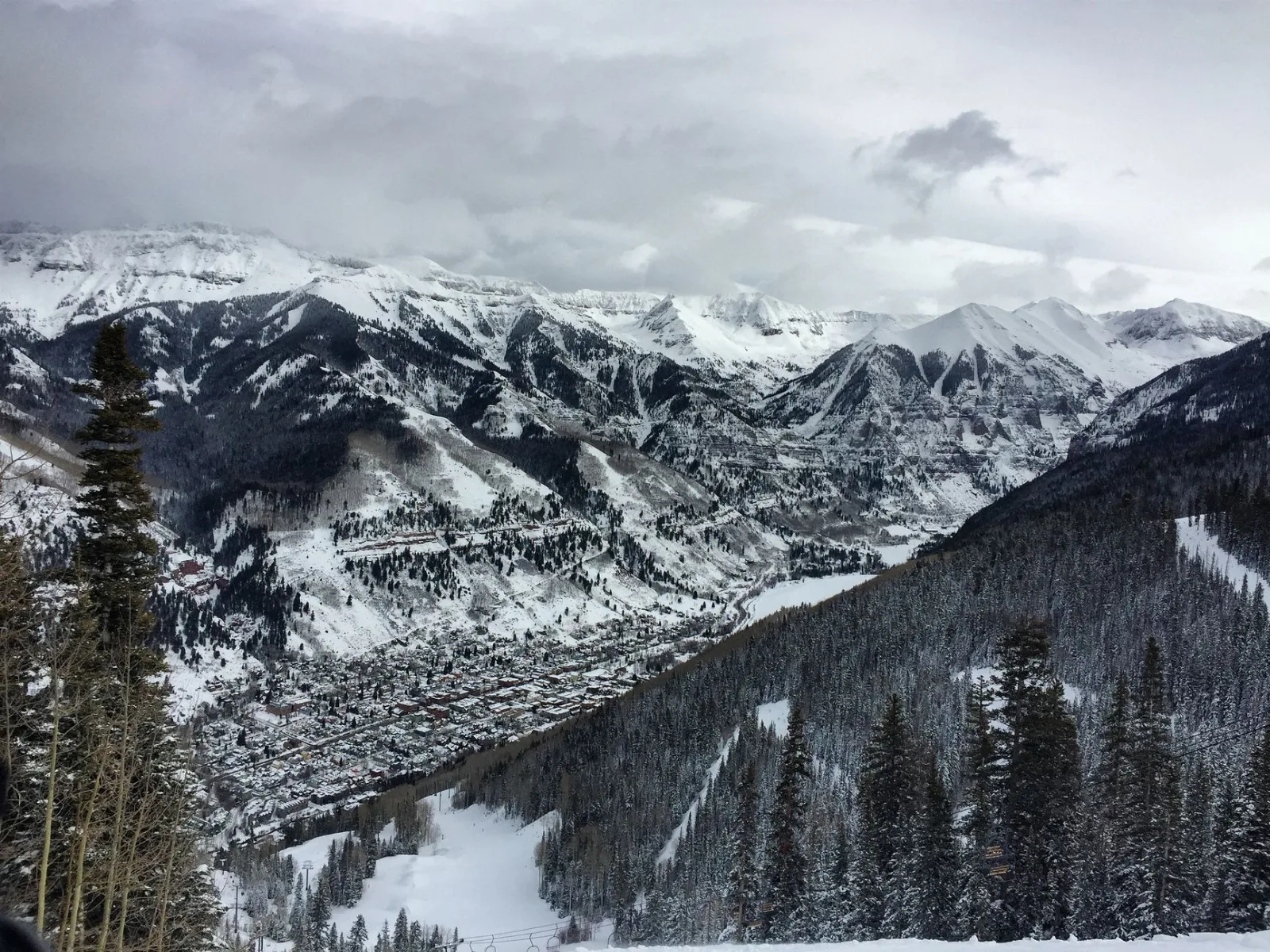
Skiing in the USA: Aspen, Jackson Hole, Big Sky, Park City, Vail
Last reviewed 21 October 2026. Figures come from each resort's own pages and the other official sources listed for this guide; confirm them again before you plan.
The biggest practical differences for a skier arriving from the Alps are the trail-rating system, the size and structure of the resorts, and the entry paperwork. The five resorts below, Aspen Snowmass, Jackson Hole, Big Sky, Park City and Vail, show how varied the Rockies are.
How do US ski resorts differ from Alpine ones?
Three differences matter most. First, trail signs follow a North American convention rather than a national or local one. Second, a single "resort" can be a group of mountains sharing one ticket or a very large single ski area. Third, each resort publishes its own mountain statistics, and these use feet and acres, so a quick conversion helps when you compare with metres and hectares.
Aspen Snowmass, for instance, describes four mountains (Aspen Mountain, Aspen Highlands, Buttermilk and Snowmass) on one lift ticket, with more than 5,700 acres combined. Park City Mountain lists 7,300 acres, and Big Sky lists 5,850 acres. Jackson Hole is smaller by comparison, with 2,500 acres of in-bounds terrain.
Elevations are also a useful comparison. Using the base and summit altitudes on the resortslopes.com resort pages, Aspen Snowmass runs from 2,400 to 3,813 m, Jackson Hole from 1,924 to 3,185 m, Big Sky from 2,073 to 3,403 m and Vail from 2,475 to 3,527 m. Park City Mountain's own page gives 2,073 m at the base and 3,056 m at the summit.
What do the trail colours mean in North America?
North American trails use symbols as well as colours: a green circle for easier terrain, a blue square for more difficult terrain, a black diamond for the most difficult, and a double black diamond for runs where extra caution is advised. An orange oval or rectangle usually marks freestyle terrain. The National Ski Areas Association adopted the system in 1968, and it traces back to sign research done for Walt Disney's unbuilt Mineral King project.
One published guide gives the typical gradients as up to 25 percent for green, 25 to 40 percent for blue and above 40 percent for black. The important point is that ratings are relative to each mountain: a blue at one resort can be harder or easier than a blue elsewhere. The same guide notes that European symbols tend to vary by mountain and country. For the European side, read our explanation of piste difficulty, and if you are still deciding what level of resort suits you, see choosing your first ski resort.
Do European skiers need ESTA to ski in the USA?
Travellers who use the Visa Waiver Program need an approved ESTA before they travel. U.S. Customs and Border Protection describes ESTA as the automated system that determines eligibility to travel under the program, and it states that you must have an e-Passport to use it. Applications can be submitted at any time before travel, and CBP recommends applying as soon as you start planning or before buying tickets.
ESTA is not a guarantee of entry: CBP officers determine admissibility on arrival. Eligibility depends on your nationality and circumstances, so use the official CBP ESTA website rather than a third-party service, and read its current requirements yourself.
What are the Epic and Ikon pass families?
These are two multi-resort season-pass families. The Epic Pass website carries a Vail Resorts copyright and lists Vail and Park City among its Rockies resorts, alongside resorts in other regions and countries. The Ikon Pass website offers different tiers and lists destinations including Jackson Hole and Aspen Snowmass. Included resorts, tiers, blackout dates and conditions change from season to season, so treat this as a neutral description and check the official pages. Not every resort here belongs to the same family.
What should you know about each resort?
Aspen Snowmass, Colorado
Aspen Snowmass consists of four mountains on one ticket. The resort describes Aspen Mountain as rising from downtown Aspen, Aspen Highlands as popular with locals and bowl hikers for intermediate and expert skiers, Buttermilk as suited to beginners, intermediates and park riders, and Snowmass as the largest of the four with the most vertical drop. For 2026-27 it lists a season from 26 November 2026 to 18 April 2027.
Jackson Hole, Wyoming
Jackson Hole lists a vertical drop of 4,139 feet, 2,500 in-bounds acres across two mountains (Après Vous and Rendezvous), and 131 named trails. Its own difficulty split is 50 percent expert, 40 percent intermediate and 10 percent beginner, which points to a resort aimed at confident skiers. The aerial tram carries 100 passengers and covers the vertical in about nine minutes. An open backcountry gate system adds access to more than 3,000 acres. Follow the resort's own guidance on the backcountry gates.
Big Sky, Montana
Big Sky lists 5,850 skiable acres, a vertical drop of 4,350 feet, a Lone Peak summit at 11,166 feet, 320 named runs and 40 lifts. Its terrain is split roughly evenly between beginner-to-advanced-intermediate and advanced-to-extreme. The Lone Peak Tram, completed in 2023, has two cabins of up to 75 passengers and a ride of just under four minutes.
Park City, Utah
Park City Mountain lists 7,300 acres, 41 lifts and more than 330 trails, and calls itself the largest ski resort in the United States. Its page gives a base of 2,073 m and a summit of 3,056 m. It is part of the Epic Pass family.
Vail, Colorado
Vail is best known for its Back Bowls, which the resort markets as seven bowls on the back side of the mountain. Vail's page for them lists 47 trails and notes that access is via several named chairs. Vail is part of the Epic Pass family. Because the resort's own pages quote different totals in different places, check the current trail map for acreage before comparing.
When should you go and how should you choose?
Seasons typically run from late November or December until April, depending on snowfall and the resort's own decision. Use the official opening and closing dates, and compare with the Alpine calendar in our best time to ski the Alps guide. If you travel with beginners, favour resorts that list large beginner and intermediate shares; if you ski expert terrain, check each resort's published difficulty split. Because ratings are relative to each mountain, begin with runs easier than your usual level on day one.
Facts here come from the resorts' own pages and government or tourism sources; rules and conditions change, so verify entry requirements, season dates and pass terms with the official sites before you book anything.
What the sources say
Every note below is drawn from the resort's own or an independent official publication.