 ResortSlopes
How to Choose Your First Ski Resort
Picking a first ski resort is less about finding "the best" one and more about matching a resort's characteristics to your ability level, group, and trip length. The factors below form a practical framework — not a ranking — because the right answer genuinely differs depending on who is going and for how long.
Piste Kilometres Relative to Ability and Trip Length
Total piste kilometres advertised by a resort is a marketing number more than a planning one unless you weight it against who is actually skiing. A beginner or family group will use a small fraction of a large resort's terrain — mostly green and blue runs — so a resort's total km figure matters far less than how much beginner-appropriate terrain it has, and how well that terrain is laid out (a contiguous progression zone versus a handful of green runs stranded between harder terrain makes a real difference). For a short trip, a smaller, well-connected resort where you are not spending time in transit between sectors is often more useful than a sprawling one where reaching different areas eats into ski time.
Altitude and Snow Reliability
Altitude is the single biggest driver of how reliable a resort's snow is across a season. Lower-altitude resorts are more exposed to warm spells and rain-instead-of-snow events, particularly early and late in the season, while higher-altitude and glacier-linked resorts hold snow more consistently. For a first trip, this trades off against access and cost: lower resorts tend to be cheaper, closer, and have gentler, more sheltered beginner terrain, while higher resorts cost more to reach and stay in but reduce the risk of a snow-poor week.
Lift Infrastructure
Not all lifts are equal, and this matters more for beginners than most trip-planning guides mention. Older drag lifts and T-bars — where you are towed uphill standing on your skis rather than seated — are demanding for first-timers to use safely, and are a common source of early-week frustration and falls at the point of getting on or off. Resorts, or specific sectors of a resort, that have modernised to chairlifts and gondolas generally offer a more comfortable, less intimidating experience for beginners, and modern high-capacity lifts also reduce queue times, which matters disproportionately on a short trip where lost time is lost skiing. It is worth checking, specifically, what lift serves the beginner slopes at a resort you are considering, rather than just what the flagship lift out of the resort looks like in photos.
Access and Proximity
How you get to and around a resort changes what a trip actually looks like day to day. Some Alpine resorts — Zermatt is the best-known example — are car-free, reached instead by train and local shuttle or cable-car within the village, which affects everything from luggage logistics to how you get to and from the airport. This is not a downside so much as a different kind of trip: car-free resorts tend to have compact, walkable centres and efficient internal transport, but they require planning around train timetables and porter or luggage services rather than a car park at your accommodation. Resorts reachable directly by car or a short transfer suit trips where flexibility and minimal transfer time matter more than village compactness.
Family and Beginner-Friendliness Signals
A few concrete things to look for beyond marketing copy:
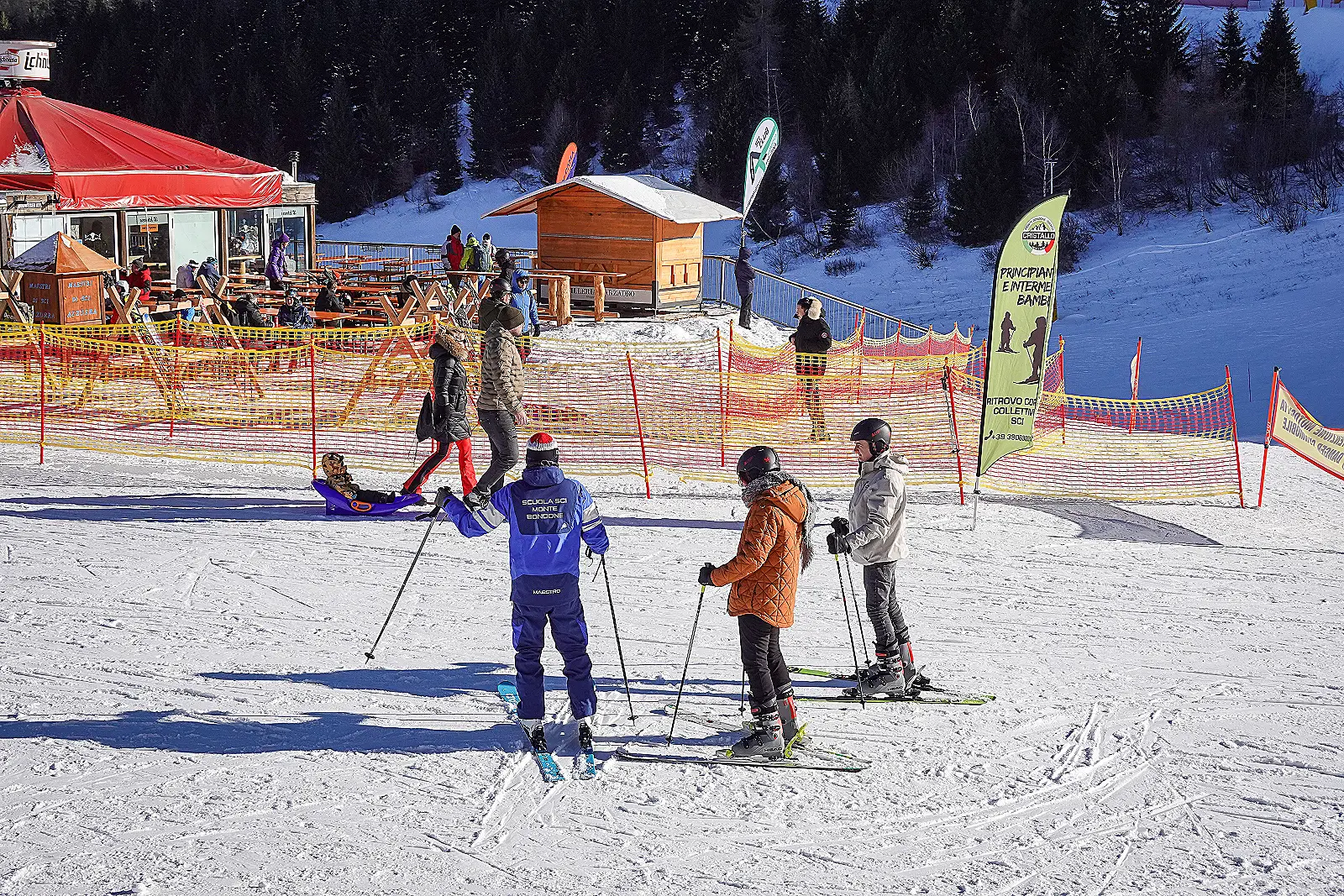
- Dedicated beginner zones physically separated from through-traffic runs, rather than green runs that merge into busier intermediate pistes partway down.
- Ski school availability in your language, with group sizes and age-banding that suit your children if travelling as a family.
- Gentle, low-consequence terrain directly at village or base level, so early lessons and confidence-building don't require a lift ride before the first turn.
- Nursery slope proximity to accommodation, reducing the amount of gear-carrying and logistics required before anyone has skied a single run.
Putting It Together
| Factor | What to check |
|---|---|
| Piste km | How much is actually beginner-graded and well-connected, not just the total |
| Altitude | Base and top altitude, and whether the resort has glacier or high-altitude backup terrain |
| Lifts | What serves the beginner area specifically — drag lift, chairlift, or gondola |
| Access | Car-free vs car-accessible, and what that means for your transfer and luggage plan |
| Beginner infrastructure | Separated nursery slopes, language-appropriate ski school, base-level gentle terrain |
None of these factors works in isolation — a resort with excellent beginner terrain but only reachable via a long, multi-leg transfer may still be the wrong choice for a three-day trip, just as a high-altitude glacier resort's snow reliability may not matter if the group is mostly non-skiers who will spend more time in the village. Weighing them against your specific trip, rather than a general "best resorts" list, is the more useful exercise.
What the sources say
Every note below is drawn from the resort's own or an independent official publication.